
The Pareto Principle is at play in so many sectors: mathematics, business, economics, and software development, just to name a few. This formula has been linked to Vilfredo Pareto, an Italian economist. In the early 1900s, he observed that 80% of the land in Italy was owned by 20% of the people. The Pareto Principle is also known as the 80/20 rule. That’s because, in much of life, it has been observed that 80% of the effects come from 20% of the causes.
For example, Microsoft has observed that if they fix the top 20% of the bugs in a software package, 80% of the problems, crashes, and complaints go away. In business, many have observed that 80% of a company’s sales come from 20% of the customer base. In an organizational dynamics setting, a manager may spend 80% of his or her time resolving issues involving 20% of the personnel.
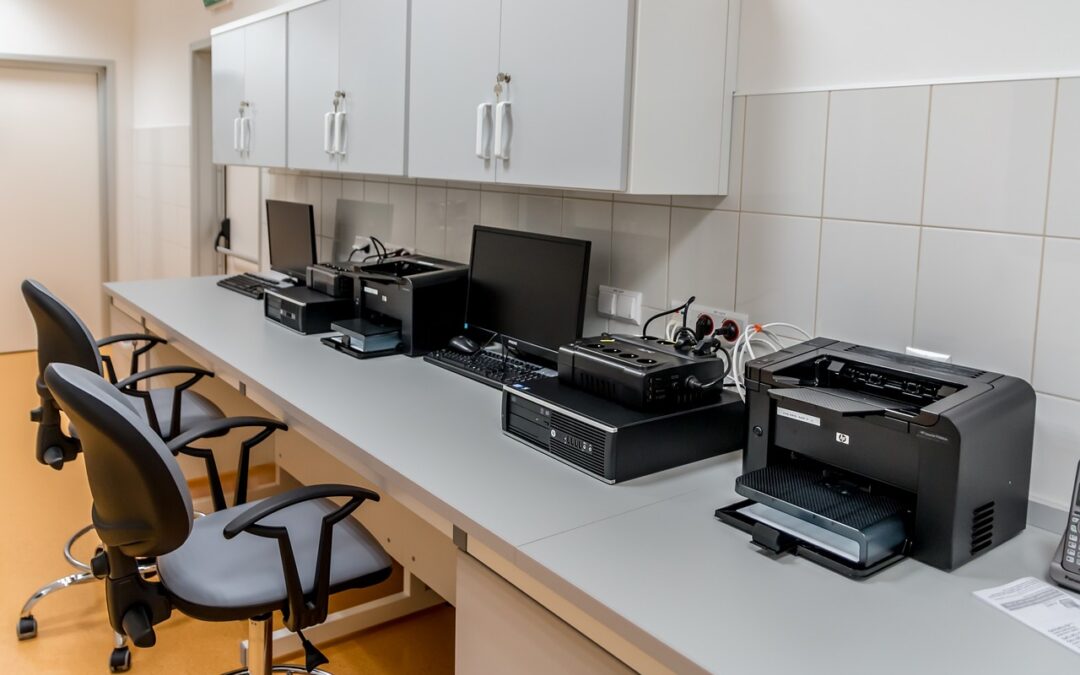
In recent weeks, I have observed a mutation in the computer repair business that I call “Pareto Printers.” Lately, about 80% of client calls for PC Assistants have involved problem printers.
For example, a software installation for one client would not complete because, the program said, the USB port on the computer was unable to support the printer functions. Yet, if we let Windows install the printer instead of using the printer software from its installation CD, it worked fine, but just as a printer. Other options, such as scanning and faxing, were not functioning. The client and I jointly determined that it would be more cost-effective to buy a new printer than to keep troubleshooting the problem. But, what sense does this make? Furthermore, resources are wasted.
Another call for help involved a printer that had been working well for months. Suddenly, after a brief power outage, the computer could not communicate with the printer. A quick investigation found that the network-attached printer had been assigned a different IP address when the power returned. A simple configuration update solved the issue.
Yet another appointment required installing a network-attached printer on a PC and a Mac. We were able to get either computer to talk to the printer, but not both. Apparently, the communication protocols were different enough that the printer would connect with the PC or the Mac, but could not accommodate both simultaneously.
Then there are the unnecessary restrictions imposed by some printer manufacturers. One well-known brand requires that all ink cartridges have ink. So if the Cyan cartridge runs out, it will not print a simple letter in black until the Cyan is replaced. This is foolish.
Computer systems consist of key components: processor, power supply, disk drive, keyboard, monitor, mouse, some sort of network/Internet connection, operating system and application software, and a printer or two. Of all these, printers demand an inordinate amount of time and attention. It seems, lately, that the Pareto printer “tails” have been wagging the computer system “dogs.”
What would it take to have Pareto printers turned on their tails … with 80% of them reasonably priced, easy to install, and easy to maintain while the remaining 20% are relegated to the recycling center? Is it too much to ask that they be the exception to a century-old mathematical formula?